A humanoid robot can look ready for a workplace long before it proves that it can work there. The next stage will be judged by repeatable tasks, clear costs, and what happens when the robot makes a mistake.
- Human shape helps only when a task needs human tools or spaces.
- Buyers need cycle time, payload, runtime, and failure data.
- The biggest unknown is whether these robots can earn more than they cost.
Why the shape matters
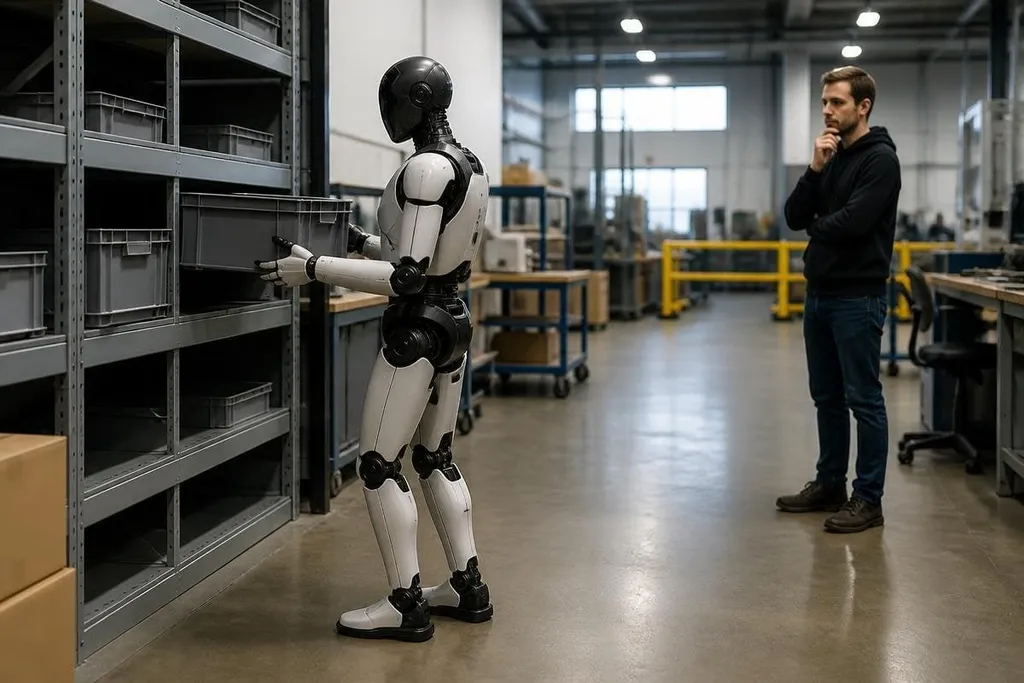
A body with two arms and two legs can fit spaces built for people. That may help with shelves, doors, workbenches, and hand tools. It does not make the robot good at those tasks by itself.
The useful question is narrower: can the robot move safely through a known area, pick the right object, place it correctly, and repeat that work for a full shift? Each step tests a different part of the system. Vision must find the object, software must plan the motion, and the hands must hold the object without damage.
A fixed robot arm may still be the better choice when the work stays in one place. It can be mounted for a known reach and given a task with fewer changes. A humanoid form makes more sense where the robot needs to share spaces, tools, or workstations with people.
The numbers a buyer should ask for
A humanoid claim needs more than a clean clip. It needs the task, success rate, and cost per run tied to a named robot and test site. Dated humanoid robotics reports can give you that record before you compare claims across machines.
Ask for the same details each time:
- Cycle time: how many seconds does one complete task take?
- Payload: how much mass can the robot carry at the stated reach?
- Runtime: how long does it work before charging or a battery change?
- Failure rate: how often does a person need to step in?
- Setup time: how long does a new task take to teach and check?
- Safety response: what does the robot do after contact, a blocked path, or a sensor fault?
These figures connect the robot to a real job. A robot that moves slowly may still fit a task with long pauses. One that needs frequent help may cost more to supervise than the work it completes.
Where the hard work remains
Hands will need to deal with objects that vary in weight, shape, surface, and position. That requires more than a good camera. The robot must estimate where an object is, choose a grip, control force, and recover when the object moves.
Walking adds another problem. A person can step around a box without planning every joint in advance. A robot must read the floor, keep its balance, and choose a safe path while carrying a load. A fall can damage the robot, the goods, or a nearby person.
Software also needs a clear limit. If a robot cannot complete a task, it should stop and ask for help rather than repeat the same failed motion. That handoff needs a record showing what happened, when it happened, and what a person must do next.
What the next useful systems may look like
The first useful deployments may stay inside narrow work areas with known objects and fixed rules. That gives the robot fewer cases to handle and gives the buyer a way to measure progress.
The work may also be split. A humanoid robot could handle movement and basic hand tasks while a person handles exceptions, quality checks, or changes to the process. This arrangement only works if the number of human interventions stays low enough to justify the robot.
I'd skip any purchase based on a short demo alone. Ask for a long task record, the full operating cost, and failure cases from the same job.
A practical buying check
Before a pilot, write down:
- The exact task, object, workspace, and handoff point.
- The required cycle time and acceptable error rate.
- The payload at the reach the job needs, not the best figure on a sheet.
- The hours of work per charge and the time needed for charging.
- The person responsible for faults, recovery, and daily checks.
- The result that would stop the pilot.
This list keeps a human-shaped machine tied to a human job. Until vendors publish repeatable task records with these details, the future of humanoid robots remains a set of tests rather than a finished business case.